
Address
Königinstrasse 10
80539 München, Germany
Google-Maps
5H2P+M7 München

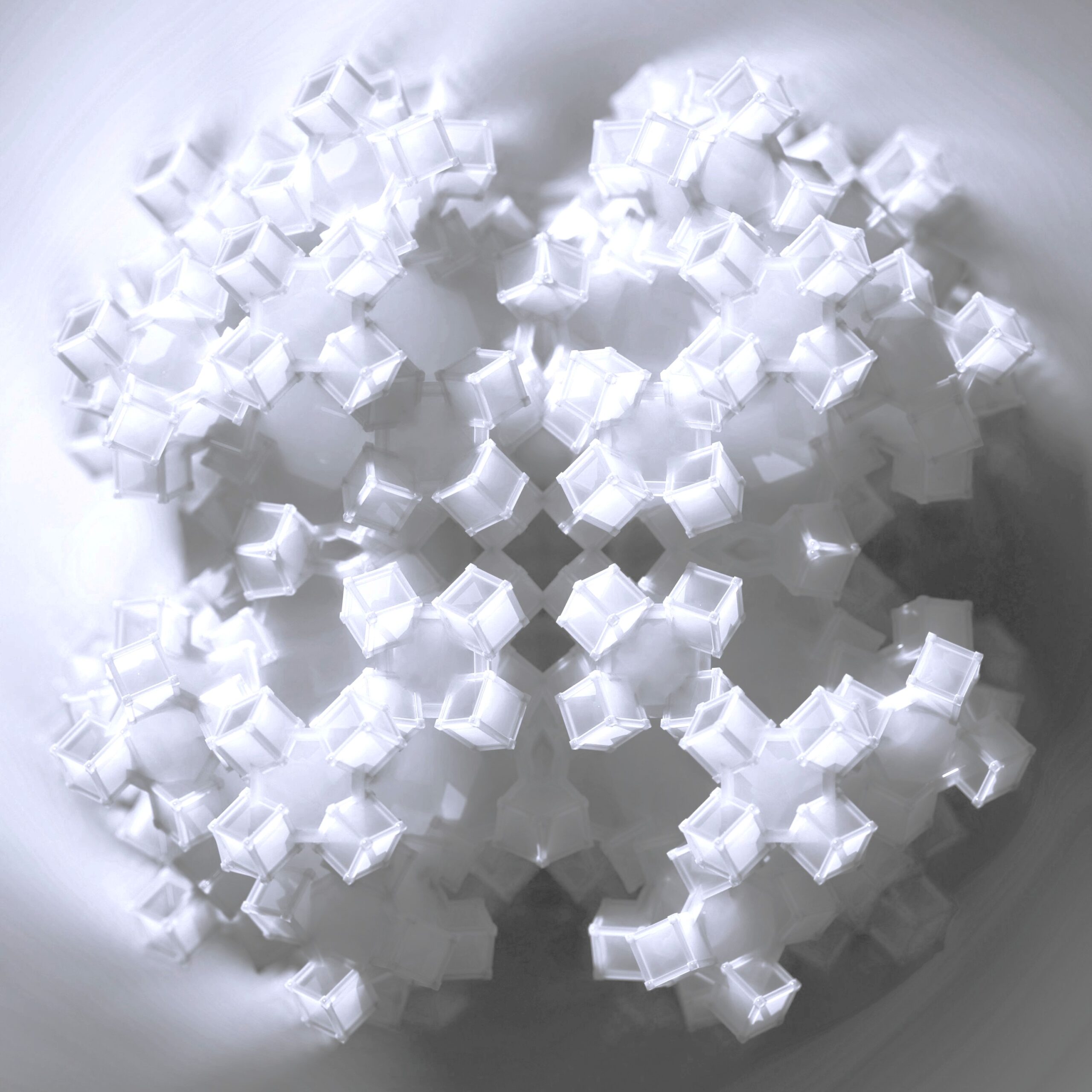
Application Spotlight
See the Invisible – Nanoparticles
Using our cutting-edge, label-free imaging technique allows to detect and tracks nanoscale objects – from gold nanoparticles to viruses, proteins, and even single molecules – with extraordinary sensitivity.
By measuring tiny fluctuations in the signal we can help to reveal particles that are far too small and faint to see for conventional light microscopy – and all of this live and their native environment
Frequently Asked Questions (FAQs)
Traditional optical microscopes struggle with objects smaller than ~200 nm or those that move in three dimensions. We help to overcome these limits by:
- Detecting ultra-weak scattering signals down to single molecules
- Achieving nanometer-scale precision in all three dimensions
- Tracking over extended depth ranges – without losing focus
- Working without fluorescent labels, preserving the natural state of the sample
Think of our technique as a highly sensitive “shadow detector.”
When a nanoparticle, such as a gold sphere just 40 nm across, scatters light, that interacts specifically with other photons from the sample. This interaction creates specific patterns which encode the particle’s size and exact position with nanometer accuracy.
These patterns are not just pretty: using clever algorithms, even AI-based tools, enable the user to reconstruct the particle’s path with remarkable speed and precision.
Gold nanoparticles are a perfect test case because of their strong and stable signal. But our technology is not limited to metals:
- Biological targets – viruses, vesicles, proteins, DNA assemblies
- Synthetic nanomaterials – polymers, colloids, nanorods, quantum dots
- Environmental & industrial particles – aerosols, pollutants, catalysts
If it scatters light, we can see it.
We can assist in unlocking ways to:
- High-speed imaging for capturing rapid nanoscale dynamics
- Extended depth tracking for complex environments like live cells or microfluidic channels
- Label-free detection to avoid altering sensitive systems
- Scalable analysis with physics-based models and machine learning